
Here’s What Your Oral Surgeon Wants You to Know
If you’ve been told you need a bone graft before getting dental implants, you’re not alone, and you probably have a lot of questions. What exactly is a bone graft? Why do some patients need one when others don’t? How long does it add to the process? At The Oral Surgery Institute of the Carolinas, serving patients in Greensboro and Asheboro, NC, we explain bone grafting for dental implants every day. In this guide, we’ll break it all down so you can walk into your consultation feeling informed and confident.
What Is Bone Grafting for Dental Implants?
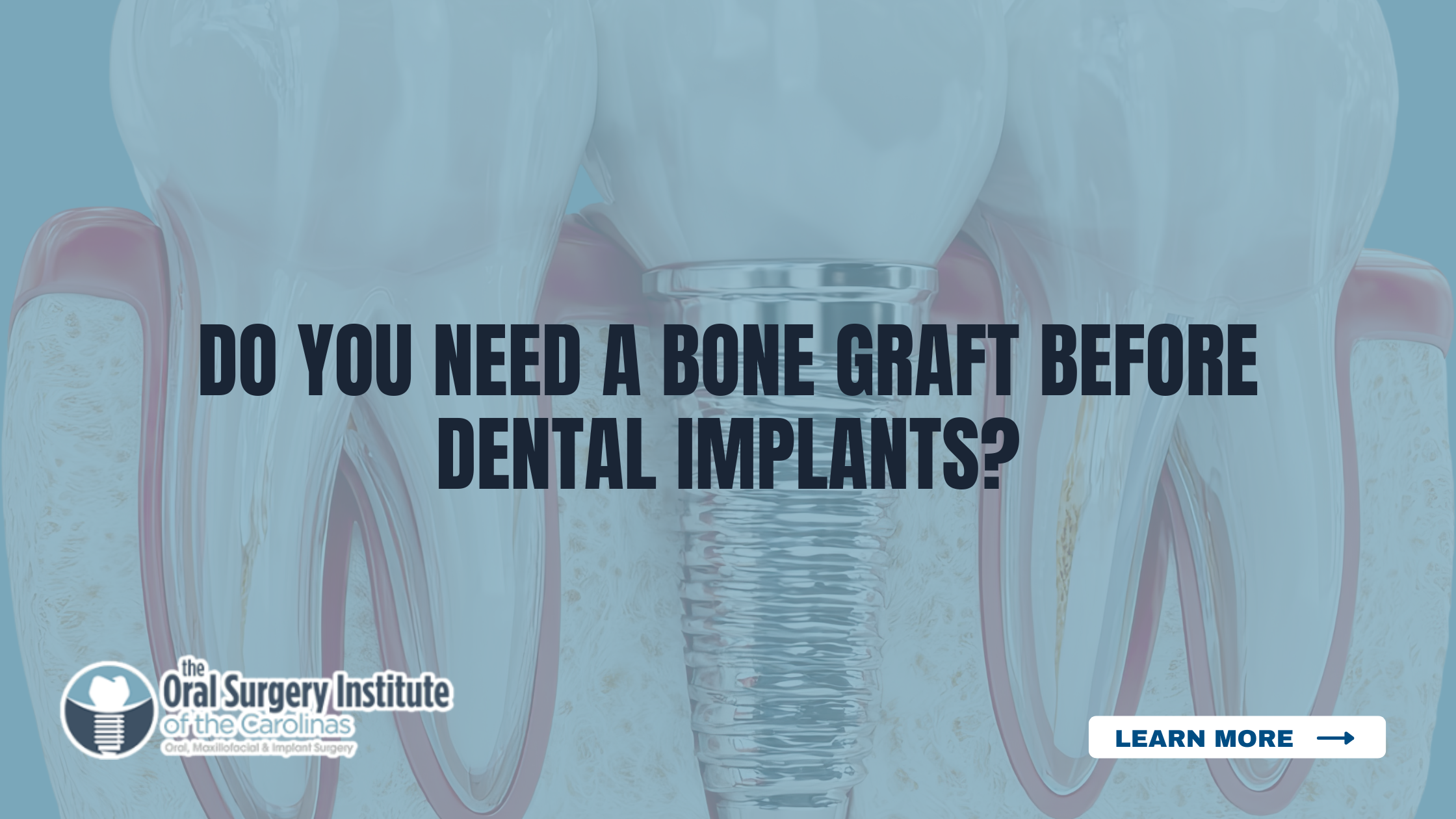
Bone grafting is a surgical procedure that rebuilds or reinforces the jawbone in areas where bone density has been lost. For a dental implant to succeed, it must fuse with the jawbone in a process called osseointegration. If there isn’t enough healthy bone to anchor the implant securely, a graft is placed first to create that stable foundation.
Think of it this way: a dental implant is essentially a titanium root. Just as a tree needs enough healthy soil to take root and thrive, your implant needs a sufficient volume of dense jawbone. Bone grafting ensures that the conditions are right for long-term implant success.
Why Do People Lose Jawbone in the First Place?
Jawbone loss is more common than most people realize, and it happens for several reasons:
- Tooth extraction: Once a tooth is removed, the jawbone beneath it begins to deteriorate, sometimes losing up to 25% of its volume within the first year.
- Gum (periodontal) disease: Advanced gum disease destroys the bone and tissue that hold teeth in place.
- Injury or trauma: A blow to the face or jaw fracture can damage bone structure.
- Wearing dentures long-term: Dentures do not stimulate the jawbone the way natural tooth roots do, leading to gradual bone resorption over time.
- Delayed implant placement: Waiting too long after a tooth is lost before pursuing an implant gives bone more time to shrink.
Types of Bone Grafts Used in Oral Surgery
Not every bone graft is the same. Your oral surgeon at The Oral Surgery Institute will recommend the type that best fits your anatomy, the extent of bone loss, and your overall treatment plan. The four main types include:
- Autograft: Bone is taken from another site in your own body, such as the chin or hip. This is considered the gold standard because it carries living bone cells, but it does require a second surgical site.
- Allograft: Donor bone sourced from a certified tissue bank. It is processed, sterilized, and widely used, eliminating the need for a second harvest site.
- Xenograft: Bone material derived from animal sources (typically bovine). It serves as a scaffold that your body gradually replaces with natural bone.
- Alloplast (synthetic): Man-made materials such as calcium phosphate or hydroxyapatite that mimic bone and encourage natural regrowth.
What to Expect During the Bone Grafting Process
At your initial consultation, our board-certified oral surgeons will review your dental X-rays and 3D cone beam CT scan (CBCT imaging) to precisely assess your bone volume and density. If a graft is needed, we will discuss the type, timeline, and anesthesia options that will make you most comfortable.
The grafting procedure itself is typically performed under local anesthesia, with IV sedation or general anesthesia available for patients who prefer it. The graft material is placed into the deficient area of the jaw and covered with a protective membrane to encourage proper bone regrowth. Most procedures take between 45 minutes and two hours, depending on complexity.
Following the procedure, patients typically experience mild to moderate swelling and discomfort for the first few days. We’ll provide detailed post-operative instructions and prescription medications to keep you comfortable during healing. Most patients return to normal daily activities within a week.
How Long Does Bone Graft Healing Take Before Implant Placement?
This is one of the most common questions patients ask — and understandably so. The honest answer: it depends on the extent of the graft. For minor socket preservation grafts (placed at the time of tooth extraction), healing time is typically 3 to 4 months before implant placement. For larger or more complex grafts involving significant bone volume restoration, the timeline may extend to 6 to 9 months.
While waiting can feel frustrating, this period is critical. Rushing into implant surgery before the graft has fully integrated dramatically increases the risk of implant failure. Our team will monitor your progress with follow-up imaging to confirm readiness and ensure the best possible outcome.
Not Everyone Needs a Bone Graft – And That’s Worth Knowing
If you have a tooth extracted and have an implant placed relatively quickly or if you naturally have sufficient bone density, you may not need a bone graft at all. Patients who pursue dental implants promptly after tooth loss are far more likely to have adequate bone available. This is one of the key reasons oral surgeons encourage patients not to delay implant evaluation after losing a tooth. Every month without a tooth root to stimulate the jaw is another month of potential bone loss.
Why Choose The Oral Surgery Institute for Bone Grafting in Greensboro and Asheboro, NC?
Our surgeons, Dr. Christopher L. Durham, Dr. Michael McLennon, and Dr. Tibebu Tsegga, are fellowship-trained oral and maxillofacial specialists with extensive experience in bone grafting and implant surgery. When you come to us, you benefit from:
- Advanced 3D CBCT digital imaging for precise treatment planning
- Multiple anesthesia options for a comfortable, anxiety-free experience
- Seamless coordination with your general dentist throughout the implant process
- Two convenient locations: Greensboro and Asheboro, NC
- In-network with Delta Dental, BCBS, Cigna, Ameritas, and other major insurers
Frequently Asked Questions About Bone Grafting for Dental Implants
Is bone grafting painful?
The procedure itself is performed under anesthesia, so you will not feel pain during the surgery. Post-operative discomfort is manageable with prescribed pain medication and typically resolves within a few days.
Will my insurance cover a bone graft?
Coverage varies by plan. Some dental and medical insurance policies cover bone grafting when it is deemed medically necessary. Our team will work with your insurance provider to determine your benefits before treatment begins.
Can a bone graft fail?
While rare, graft complications can occur, including infection or failure to integrate. Choosing a board-certified oral surgeon and following all post-operative care instructions significantly reduces this risk.
Ready to Find Out If You Need a Bone Graft?
The best way to know whether bone grafting is part of your dental implant journey is to schedule a consultation with our team. We’ll review your imaging, answer every question, and build a personalized treatment plan around your goals and timeline.
- 📍 Greensboro Office: 6 North Pointe Court, Greensboro, NC 27408 | (336) 275-6600
- 📍 Asheboro Office: 303 Ross St, Asheboro, NC 27203 | (336) 318-1014
- 🌐 Book online: https://theoralsurgeryinstitute.com/contact